PLMA's 2023 Trade Show to Hail 'The Store Brands Phenomenon'

The largest event for store brands in North America is set for November 12-14 in Chicago

NEW YORK (April 24, 2023) - At a time when store brands have grown to become a $230 billion industry in the U.S., PLMA has announced a fitting theme for its 2023 Private Label Trade Show: “The Store Brands Phenomenon.”

The show will be held November 12-14 at the Donald E. Stephens Convention Center in Chicago.

"'The Store Brands Phenomenon' theme is appropriate in many ways," said PLMA President Peggy Davies. "Hailed as dynamic, innovative and pervasive, store brands offer boundless opportunities for retailers, manufacturers and trade suppliers."

The growth of store brands has been strong and steady. By the end of 2022, PLMA calculates that annual store brand sales had increased by 40% over a five-year period. Last year's double-digit gains continued through the first quarter of 2023, according to Circana. Sales and dollar and unit market shares are at all-time highs. 

They are the shopper’s best friend, offering innovation, performance and quality. Store brands accounted for nearly one-third of all new sales flowing into U.S. retailing last year.

And there's more to come. Every day, store brand products are moving into new categories, new chains, new channels, and new platforms.

Store brands are a powerful retailer component that provides important points of differentiation, competitive advantage and builds consumer loyalty," added Davies.

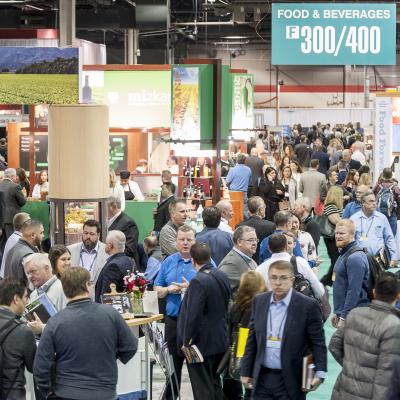
The 2023 Private Label Trade Show will reflect this expansion. PLMA expects that over 1,500 companies will be exhibiting and 5,000 individuals attending.

"For more than 40 years, PLMA has provided supermarkets, supercenters, drug chains, wholesale clubs, dollar and specialty stores, mass merchandisers, importers and exporters, and e-commerce retailers an exclusive venue to discover the latest food and non-food products, ingredients, flavors, fragrances, and packaging,” Davies said.

For more information on "The Store Brands Phenomenon" trade show, contact PLMA at +1 212 972-3131, email info@plma.com or click here for more information.

About PLMA

The Private Label Manufacturers Association (PLMA) is a non-profit trade organization founded in 1979 to promote the store brands industry. With executive offices in New York and International Council offices in Amsterdam, PLMA represents more than 4,000 member companies worldwide. In addition to the Annual Private Label Trade Show in Chicago and its World of Private Label Trade Show in Amsterdam, PLMA provides annual conferences, executive education and professional development opportunities. Follow PLMA on plma.com, plmainternational.com, Twitter and LinkedIn.
Store Brand Beverage Numbers Deserve a Toast!

Featured in PLMA’s e-Scanner March 25, 2023 newsletter, created by Tom Prendergast, Director, Research Services

Throughout store brands' steady double-digit gains of 2022, which has continued through the first two months of this year, fully 16 of the 17 departments tracked by IRI showed store brand improvement.

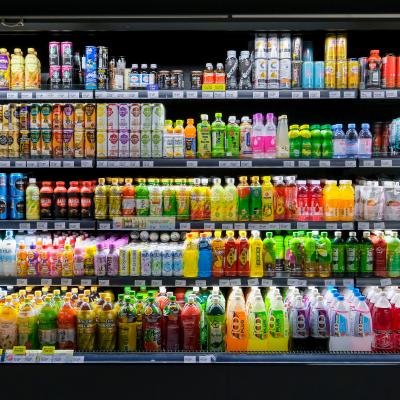
One department demonstrated particularly strong sales performance -- Beverages -- a section once considered impenetrable for store brands due to the powerhouse national brands that inhabit it.

But that dominance may be changing. In this extremely competitive department, store brands have been growing at a faster pace than brands for the past 4, 12 and 52 weeks, reported IRI Unify exclusively to PLMA.

The numbers deserve a toast. Total private label beverage sales in 2022 were $12 billion and dollar sales grew by 19.3%. Double digit growth continued into the new year as dollar sales over the past four weeks totaled 18.6%, only a slight dip from the 20% sales growth in the past three months.  

The Beverages department is the third largest of the 17 tracked by IRI when it comes to national brand and store brand dollar sales ($130B) and second largest in unit sales with over 40 billion in sales. 

The largest category in beverages is bottled water. The category has sales of $6.8 billion in 2022 and dollar sales growth of 23.1%. While dollar sales did slow, from 21.3% over 12 weeks to 20.3% in the past four weeks, it remains the largest dollar sales category in the department.

Water is not the only growth category in this department. When you take a closer look at other areas you see while not everyone is showing growth but the ones gaining sales are especially strong.

For instance, carbonated beverages have increased from 15.8%-dollar sales growth last year to 32.4% in February and 28.9% over the past three months. This growth is also reflected in unit sales, as sales for carbonated beverages grew 4% in the past 4 weeks and 1.2% over the past 12 weeks. While unit sales did dip 2.5% last year, like dollar sales, sales of units of carbonated beverages continued to advance.

Two other growing categories over this period were refrigerated tea/coffee and tea bags. Refrigerated tea/coffee grew from 8.2% in dollar sales last year to 10.7% in the past four weeks. Tea bags had even more dramatic results, as dollar sales went from 5% in 2022 to 12.3% in the past three months to 17.5% in the past four weeks.

Other categories also stood out. These include bottled juices (10%), coffee (15.4%) and ready to drink tea/coffee (15.8%); all had double digit growth in 2022. In the past four weeks, while growth has slowed, it remains positive, ranging from 66.8% for ready to drink tea and coffee to 13.9% for coffee and 10.2% for bottled juices.

Unit sales improvements were also striking. Ready to drink tea/coffee saw units rise from 10.4% in 2022 to 84% over the past 3 months and 75.7% in the past 4 weeks. Coffee unit sales were up 2.8% last year but kept most of that growth in the past four weeks with a 2.5%-unit sales growth.

After decades of being a bottom shelf afterthought in a strong national branded department, store brands are evolving to become a presence if not a player in many parts of the huge Beverages sector.

To find out more IRI Unify data is available to all PLMA members and can be found at plma.com where these statistics and sales of 317 categories and 967 subcategories can be found.

PLMA Announces 2023 Private Label Hall of Fame Inductees

NEW YORK (March 23, 2023) - The Private Label Hall of Fame Class of 2023 was inducted last night during PLMA’s Annual Meeting & Leadership Conference in Orlando. 

Presented by PLMA and Store Brands magazine, the Private Label Hall of Fame was created in 2006 to recognize the men and women who have made significant contributions to the growth and development of the global private brand industry.  

This year, the Hall of Fame honors 16 individuals in four categories: Next Gen Private Label Leader, Private Brand Innovator, Private Brand Champion, and Lifetime Achievement. 

“We proudly celebrate the outstanding achievements of these proven leaders and innovators,” said PLMA President Peggy Davies. “Their hard work and dedication are instrumental to the success of the store brands business.” 


Private Label Hall of Fame Class of 2023
 

         Next Gen Private Label Leader: 

  • Anthony Cera III, Own Brands Manager, Perishables, SpartanNash    
  • Colleen Kangas, President, Purcell International      
  • Angela LePore, Senior Manager, Private Brands Product Development, Simmons Pet Food, Inc.    
  • Kristin Provost, Senior Manager, Category Insights, Topco Associates, LLC                 
     
    Private Brand Innovator:
     
  • Alicia Cook, Category Director, Save A Lot                        
  • Casey Creegan, Manager of Merchandising, Love’s Travel Stops        
  • Roger Scommegna, CEO, Flying Blue Imports         
  • Guido Tremolini, President/Co-Owner, G.S. Gelato

    Private Brand Champion: 
  • Shane Brown, Director, Own Brand Sourcing, Giant Eagle, Inc. 
  • Jill Clark, VP, Sales and Marketing, Dutch Gold Honey, Inc. 
  • Andrea Collaro, Senior Director, Owned Brands, Brand Management/Product Development, Walgreens Co. 
  • Kristie Nicolosi, CEO, The Kingswood Company

        Lifetime Achievement: 

  • Brenda Lord, Vice President, Private Brands, CVS Health          
  • Nancy Ragozzino, President, Ragozzino Foods, Inc.         
  • Andy Russick, Vice President, Sales and Marketing, Pacific Coast Producers      
  • Jill Sando, Executive Vice President and Chief Merchandising Officer, Target
     
    “The 16 honorees represent the best of the best from across the world of private label and showcase the depth of talent the industry has to offer,” said Store Brands magazine Executive Editor & Associate Publisher Greg Sleter. “This august group of retailers and suppliers have had a major impact on the private label business and will continue to do so in the years ahead.” 
     
    Profiles on all inductees will be featured in the May/June issue of Store Brands magazine, featured on StoreBrands.com, and posted in a special section of plma.com. 

     
    About PLMA 

    The Private Label Manufacturers Association (PLMA) is a non-profit trade organization founded in 1979 to promote the store brands industry. With executive offices in New York and International Council offices in Amsterdam, PLMA represents more than 4,000 member companies worldwide. In addition to the Annual Private Label Trade Show in Chicago and its World of Private Label Trade Show in Amsterdam, PLMA provides annual conferences, executive education and professional development opportunities. Follow PLMA on plma.com, plmainternational.com, Twitter and LinkedIn.
"How Private Label Packaging Strategies Influence Shoppers Intent to Purchase"
Notable Quotable: Neil Saunders, GlobalData

“The consumer has given permission to retailers to do more with private label.”

- Neil Saunders, Managing Director at GlobalData, told PLMA Live!

Click here to watch interview.

Store Brand Shoutout: Dollar General, Giant Eagle

Every month, e-scanner will highlight two PLMA Salute to Excellence Award® winners for store brand creativity and innovation. Click here to view the full list of winners.

Food: Giant Eagle, Market District™ Artisan Ciabatta Sandwich Rolls
Giant Eagle, Market District™ Artisan Ciabatta Sandwich Rolls
Nonfood: llar General Nature's Menu® Adult Dog Food, Lamb & Brown Rice Recipe
TRU RED™ Brightwell 5-in-1 Productivity LED Desk Light
Study: Consumers Rely on Store Brands to Reduce Costs

Grocery shopper households are addressing rising food costs by more at-home eating (39%), purchasing store brand items (36%), and buying in bulk (32%), according to new research conducted by agriculture insights and research firm Stratovation Group and food and agriculture communications agency Inspire.

More than half of respondents agree strongly that increases in food prices have affected how they buy food, either at grocery stores or restaurants.

Among other results:
-    Nearly half of respondents try to make food last longer by stretching food into multiple meals
-    About three-quarters of those surveyed have used their local grocery store's food pickup and food delivery services
-    About 7 in 10 say they have used a third-party grocery app
Despite shifting toward more at-home meals to combat rising food costs, respondents indicated they are still dining out and using restaurant delivery.
•    About half of those surveyed eat at a restaurant once a week or twice a month
•    About 8 in 10 say they order restaurant delivery at least once each month
•    DoorDash (64%) and UberEATS (47%) are the most frequently used restaurant delivery services
 

Report: U.S. Private Label CPG Sales Reach $330 Billion

U.S. private label sales have reached $330 billion, capturing a 24% unit share and a 23% dollar share of the total market, according to a Circana report.

Private label products now hold a 24% value share within food and beverage aisles. Growth is visible across the store, but recent momentum is strongest in emerging spaces. Club channels are currently the primary growth engine, accounting for nearly half of all private brand growth as consumers seek sustained value.

Additional findings:

•    National grocers are accelerating private label gains faster than regional players, with club channels contributing nearly half of all private brand growth.
•    Private label innovation remains a critical growth engine with retailers focusing on sustainable sourcing, wellness-oriented products, and premium offerings. Elevated private brands have seen outsized innovation levels, particularly in indulgent snacking and beverages.
•    Consumers report trusting store brands as much as name brands for quality products, with private label quality perception growing across categories like food, beverages, and non-food items, such as kitchen and paper goods.
•    Sustainability and wellness-focused product lines are becoming key drivers of private label growth, with private label loyalists often prioritizing wellness and environmentally friendly options.

Younger consumers, particularly Generation Z, are driving this momentum in the U.S. market. Shoppers increasingly view private labels as high-quality alternatives to name brands. Retailers are meeting this demand by expanding their portfolios to include premium, functional, and wellness-focused product lines that rival traditional brands.

The key drivers — financial pressures on households, improved quality and trust, strong Gen Z adoption, and the growing influence of loyalty and exclusivity — remain firmly in place, positioning private label for continued success, Sally Lyons Wyatt, global executive vice president and chief advisor at Circana, said in a statement. She added, however, that the competitive landscape is intensifying, with name brands stepping up innovation, sharpening pricing, and amplifying their social and digital engagement.

Sales Alert: New Market Data

Store brand unit sales gained a modest 0.1% during Q1 of 2026 but it was enough to push store brand unit share to 24.1%, a new record high.

Still, American shoppers continuing restraint on their grocery purchases was evident in Q1 sales results provided to PLMA by Circana. Through March 22, YTD unit sales of both store brands and national brands were virtually level. Both sectors were plus 0.1% vs the same quarter a year ago. In overall Q1 dollar sales, store brands slipped 0.1% and national brands added 2.5%.

On the department level the Q1 store brand sales results were mostly on the positive side of the ledger. Eight of the eleven sections experienced store brand dollar sales gains while five of the eleven recorded private label unit sales increases.

Digging deeper, four departments outperformed the overall average when it came to Q1 private label unit sales: Beverages were up by +2.7%, Pet Care rose +2.0%, Refrigerated gained +1.7% and Auto increased +1.1%.

Looking at store brand dollar sales, the leading gainers were Beverages, up +7%, followed by Beauty (+4.5%), General Merchandise (+3.3%), Pet Care (+2.8%), Frozen (+2.3%), General Food (+1.4%) and Auto (+0.7%).

In Q1 of 2026, store brands continued to represent significant savings for consumers on the purchase of their regular household needs. During the three-month period, American shoppers saved 17% at checkout when they opted to buy the store brand version of food and nonfood grocery products versus the national brand counterparts.

On average, all store brand products sold during Q1 were priced at $4.11 per unit while all national brands were $4.79 each. The difference in price per unit was 68 cents or 17%, according to PLMA, which based the finding on YTD sales data from Circana.

Private Label Sales Strengthen Across Europe

Private label continued its strong momentum across Europe in 2025, reinforcing its role as a strategic pillar for retailers and a key growth engine for manufacturers.

According to data provided to PLMA by NielsenIQ, total private label sales across seventeen countries reached €387 billion, up by €15.3 billion, giving store brands a pan-European value share of 38.8%, according to "A Mosaic of Markets: PLMA’s 2026 Report on the Status of Private Label Across Europe."

Private label outperformed the broader grocery sector as turnover rose 4.1%, compared with 3.2% growth for the total market and a 2.7% gain for manufacturer brands.

In volume terms the gap was even clearer: private label unit sales increased by 1.3%, more than double the overall market’s plus 0.6%, while branded products saw a slight decline.

Inflation and heightened price awareness continue to influence shopper behavior, but perceived value alone does not explain the success of private label products.

Retailers are increasingly investing in innovation, quality and sustainability to underscore the total value proposition of retailer brands and build consumer trust, report experts.

Euromonitor International, for example, says retailers are incorporating sustainability and innovation into private label development to position their brands as credible and value-driven competitors to national brands.

Even with this overall progress, Europe remains a diverse landscape when it comes to private label penetration. Private label now exceeds 50% market share in Switzerland, while in other countries value shares range from 48.2% in Portugal to 23.6% in Norway.

In 12 of 17 countries analyzed, private label grew faster than branded goods. The best private label improvements were found in Portugal, Hungary, Norway, Spain and Greece.

Performance also varies widely by product department. Private label growth was particularly strong in health care, where sales rose 13% in value and 10% in volume, albeit from a small base.

Meanwhile, fresh and perishable foods continued to perform well, reflecting demand for healthier and more transparent food options.

Consumer perception is also shifting. Surveys reveal 96% of shoppers consider private label essential to their shopping basket, with most believing store brands now match national brands in quality and sustainability.

The overall picture is clear: Europe’s leading national grocery markets may differ in structure and maturity but across this mosaic, private label is firmly embedded and continuing to expand.

PLMA has published its first ever, European private label sales compilation and commentary, titled "A Mosaic of Markets: PLMA’s 2026 Report on the Status of Private Label Across Europe." It details 2025 sales results for both private label and manufacturer brands across the 17 countries monitored exclusively for PLMA by NielsenIQ.

The report is available at the website of the Private Label Manufacturers Association International Council, plmainternational.com

PLMA's 2026 World of Private Label International Trade Show runs May 19-20 at the RAI Amsterdam Convention Centre, Amsterdam.