



- CONGRESS
- TARIFFS
- WHITE HOUSE
- ENVIRONMENTAL PROTECTION AGENCY
- STATESIDE NEWS
- FOOD AND DRUG ADMINISTRATION
- USDA
- PACKAGING
- Policies We Are Watching
CONGRESS
American Diet Under Review
House Hearing Will Review Proposed Food Regulatory Laws
Members of the House of Representatives are jumping into the debate to improve the health of Americans through diet while also protecting food producers. A subcommittee hearing is scheduled for April 29 to review two dozen house bills addressing a wide range of issues including food dye, baby formula, imports, transparency, the Generally Accepted As Safe Rule (GRAS.) The hearing, titled “Healthier America: Legislative Proposals on the Regulation and Oversight of Food” was announced by Congressman Brett Guthrie, Chairman of the House Committee on Energy and Commerce, and congressman Morgan Giffith who is the Chairman of the Subcommittee on Health.
TARIFFS
Tariff Refunds on the Way
Customs Launches Phase One of Reimbursements
U.S. Customs and Border Protection has launched the Consolidated Administration and Processing of Entries (CAPE) system allowing importers to request refunds through the Automated Commercial Environment (ACE) online portal. The initial phase covers unliquidated entries, which are not yet finalized by Customs, and entries within 80 days of liquidation. A recent Supreme Court ruling striking down certain tariffs is expected to result in refunds exceeding $166 billion.
WHITE HOUSE
Gas Tax Holidays?
Politicians Try to Ease Pain at the Pumps
Diesel trucking fleets continue to feel the impact of spiking fuel costs, up 50% since the start of the Iran War and nearing the peak pricing which occurred after Russia’s invasion of Ukraine in 2022. A consumer survey, recently completed by the grocery marketing company Snipp, links higher fuel prices and consumer efforts to cut grocery budgets and limit store trips.
Two U.S. Senators have introduced the Gas Prices Relief Act of 2026, now under review by the House Finance Committee, which would suspend the federal tax on gas purchases (18.4¢ per gallon) through October 1, 2026. The White House has said it might consider suspending the tax through executive order but prefers that states act first.
Some states have already acted. On March 20th, Georgia suspended its 37.3¢ diesel gas tax for 60 days. Indiana paused its tax for 30 days and Utah plans a 15% reduction (6¢) from July through December. Other states including Arizona, Connecticut, Florida, Maryland, Pennsylvania, Texas, South Carolina, West Virginia, Virginia, New York, and Tennessee, are exploring similar relief.
ENVIRONMENTAL PROTECTION AGENCY
PFAS Deadline Delayed Again
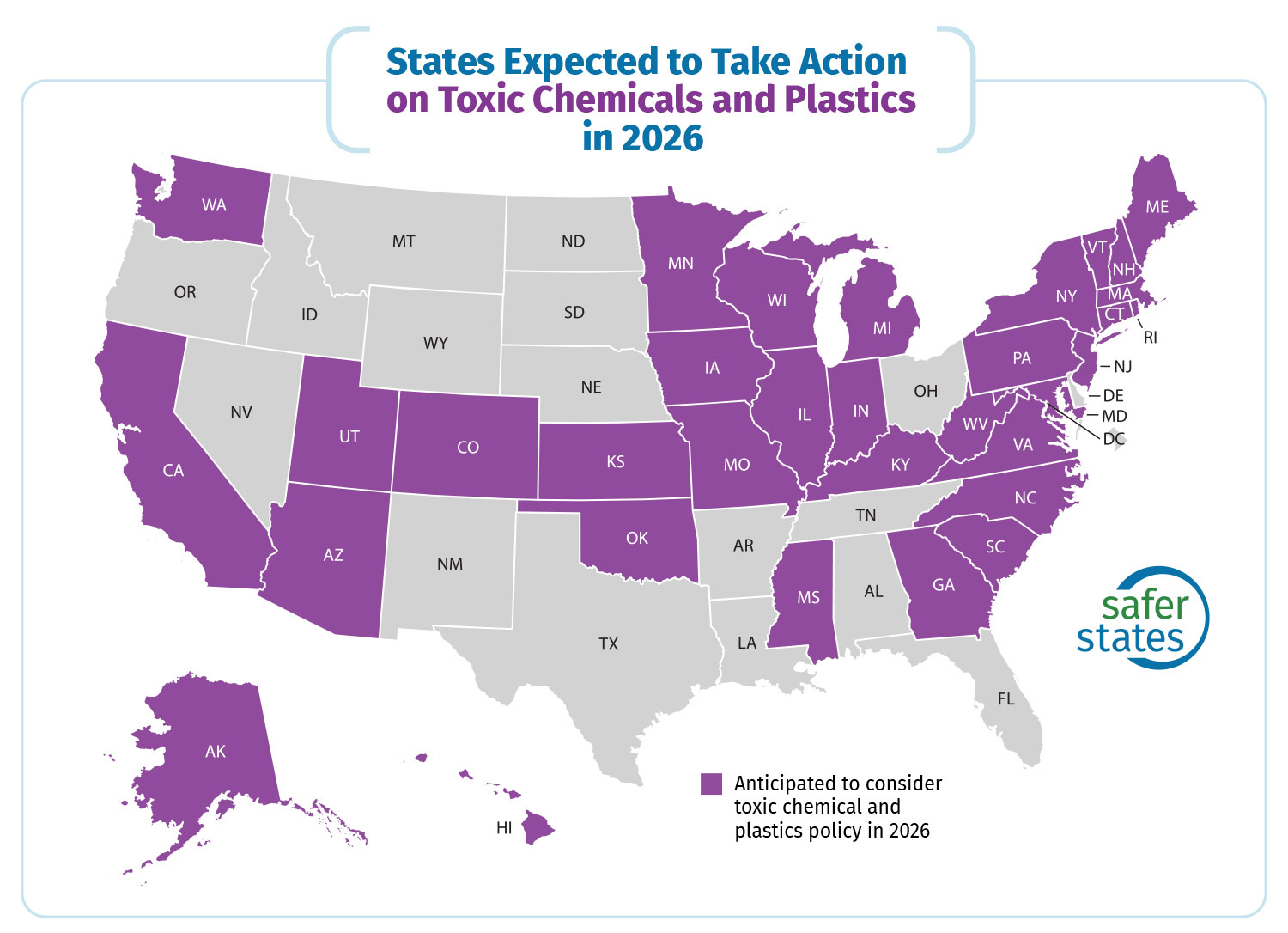
EPA Delays While States Step Up
The EPA has extended the reporting period for PFAS (so‑called “forever chemicals”) to begin on January 31, 2027, or 60 days following the effective date of a final rule on PFAS reporting requirements, whichever comes first. The reporting period was originally set to begin on April 23, 2026. The rule will require manufacturers and importers to disclose any PFAS‑containing products.
Meanwhile, states are pushing ahead. The advocacy group Safer States reports 33 states have proposed PFAS‑related bills this year. Legislation includes Wisconsin’s new water‑protection law and others targeting chemicals in cosmetics, cookware, clothing, menstrual products, and food packaging illustrating an accelerating patchwork of state action.
STATESIDE NEWS
Register Shock! Not Just-A-Buck
Utah Hits Repeat Overchargers Where It Hurts
Utah has strengthened its enforcement of retail pricing violations by doubling penalties for stores that repeatedly overcharge customers. Under the new law, any store that fails inspection more than five times may face fines of up to $10,000. While the issue gained attention through discount chains, the law applies broadly to all retail grocery outlets operating in the state.
The legislation follows reporting by The Guardian, which exposed widespread and persistent overcharging at major discount chains, including Family Dollar and Dollar General. The investigation documented thousands of failed inspections nationwide. In one notable case, a Utah Family Dollar location failed 28 consecutive pricing inspections and recorded an overcharge rate of 48% in May 2024.
State lawmakers enacted the increased penalties to draw the attention of corporate leadership and encourage stronger compliance measures. The issue typically arises when shelf labels are not updated to reflect current prices, even though register systems reflect the higher amounts resulting in customers being charged more than advertised.
California Eyes a ‘Non-UPF’ Seal
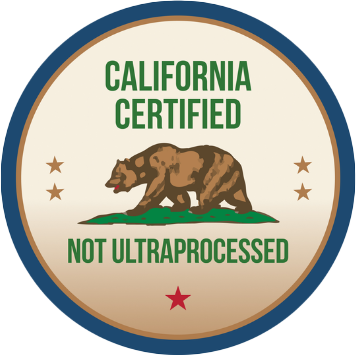 Labeling Non-Ultra-Processed Foods
California legislators are considering a bill creating a “California Certified Non–Ultra‑Processed” seal for food products. Participation would be voluntary for manufacturers, but grocery stores with $10 million+ in annual sales would be required to prominently display certified items.
NY Wants to Put Their Money Where the Mouths Are
Bill Aims to Back Grocers in Food Deserts
New York’s proposed Food Retail Establishment Subsidization for Healthy Communities Act (FRESH) would support new grocery stores in underserved areas through loans, guarantees, and grants. Applicants must hire local employees and participate in both SNAP benefits and New York' s Grown & Certified program. The $10 million dollar funding would have to be added and passed as part of the 2027 state budget.
If the Poor Can’t Have Soda, Neither Can Anyone Else
Colorado Might Apply SNAP Changes to State-Funded Events
At a recent Colorado Human Services meeting, officials indicated Gov. Jared Polis may issue an executive order prohibiting the use of funds to purchase items restricted for purchase using SNAP benefits. Critics call the measure “food policing,” while supporters view it as part of a broader health initiative.
Texas and Florida have already enacted similar SNAP restrictions:
- Texas bans candy and sweetened drinks with more than 5g of added sugar or any artificial sweeteners.
- Florida excludes soda, candy, energy drinks, and ultra‑processed desserts.
FOOD AND DRUG ADMINISTRATION
‘Natural’ Food Dyes Under Review
FDA Pauses After Safety Questions
The FDA has delayed approval of two food dyes the agency touted as alternatives to petroleum-based food colorings after watchdog groups raised safety concerns.
Advocacy group GMO/Toxin Free USA says Beetroot Red has not been ruled out as a carcinogen while Obelisk Tech Systems claims spirulina extract’s level of arsenic could surpass safe levels and has not been proven safe for children. Approval will follow a renewed safety evaluation.
Wonder Drugs or Drugs to Wonder About?
Peptides Poised for a Comeback
The FDA may soon reverse its ban on certain peptide injectables. Fourteen compounds were barred in 2023 over sourcing and safety concerns. Supporters, including Secretary Robert F. Kennedy Jr., argue that the substances are safe and effective. The Pharmacy Compounding Advisory Committee is set to vote later this year.
USDA
Leaner Cuts Ahead
Administration Proposes $4.9B USDA Budget Slice
The Trump administration has proposed cutting $4.9 billion (6.7%) from the USDA’s annual budget, targeting capacity grants for research and education, as well as programs that promote U.S. crops abroad. Officials frame it as an efficiency measure while critics warn the reductions could impact food safety, crop insurance, and rural development.
PACKAGING
EPR Springs Into Action
States Roll Out Producer Responsibility Laws
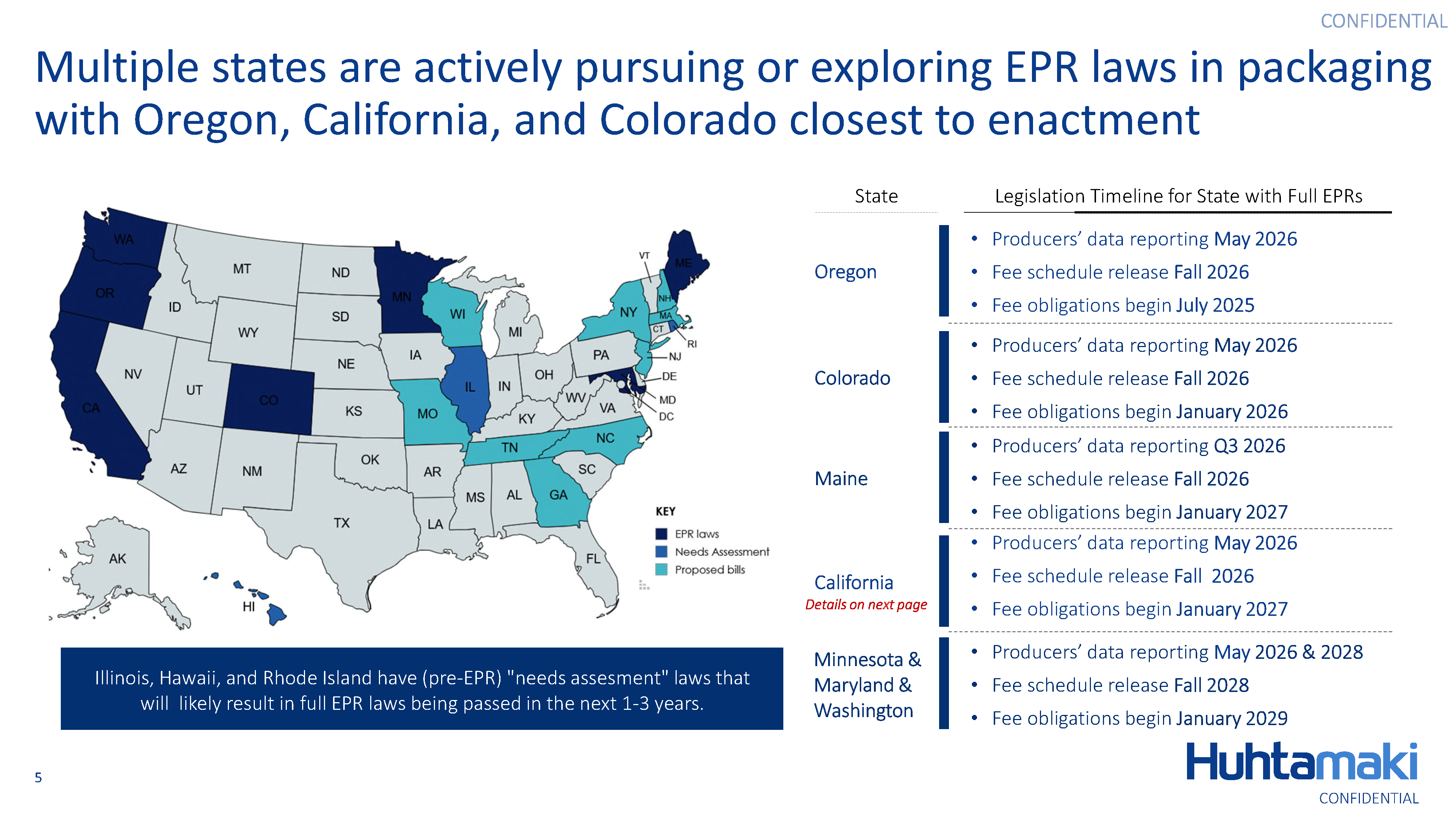
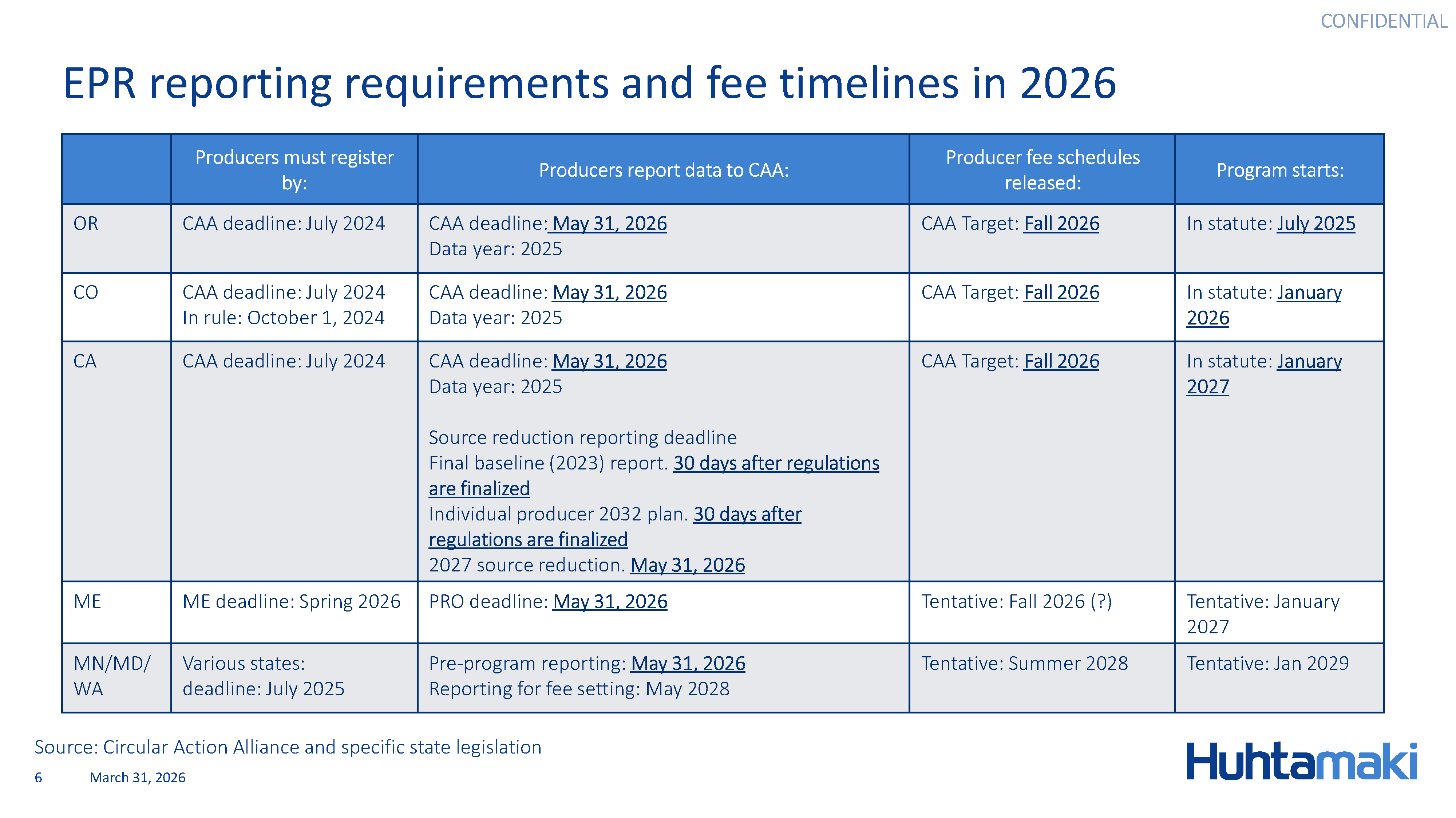
Several states’ Extended Producer Responsibility (EPR) laws are taking effect, requiring producers to fund recycling programs for their packaging. Each state appoints a Producer Responsibility Organization (PRO) to oversee compliance, cost-sharing, and enforcement. Companies using recyclable or recycled materials earn lower ERP fees under eco-modulation incentives.
Recent movement:
- Washington State: Reporting begins May 31.
- Maine: Producer registration and reporting starts May 2026.
- Vermont: Packaging data due May 31.
Some Challenges to Environmental Regulations
Recycling Rules Face Court Battles
Eighteen industry groups have challenged California’s “Truth in Labeling” law, also known as the “Truth in Recycling” law, arguing it unconstitutionally limits free‑speech rights by restricting the use of the “chasing arrows” recycling symbol unless the product or packaging meets certain criteria. The case is pending in the U.S. District Court for the Southern District of California. Enforcement of the law is slated for October 2026.
In Oregon, the National Association of Wholesalers and Distributors has sued the Department of Environmental Quality, claiming the Plastic Pollution and Recycling Modernization Act, Oregon’s EPR program, violates the Dormant Commerce Clause, and violates the Due Process Clauses of the federal and Oregon constitutions. A court injunction has paused related fees for plaintiffs in the lawsuit until July.
NJ Says No to Foam
Polystyrene Ban Expands Nationwide
New Jersey’s ban on expanded polystyrene (EPS) packaging takes effect in May, with Virginia following in July. They join 10 states and D.C. already prohibiting the material, widely used for meat trays, produce boxes, egg cartons, and take‑away containers.
Policies We Are Watching
Items below have not changed since our last edition
- “GRAS” Rule- (Generally Recognized As Safe) FDA notice of proposed rulemaking pending
- Front of Pack Labeling- The FDA is still considering new label protocols
- Several retailers’ store brands are dealing with lawsuits accusing them of trademark infringement:
- Mondelez v. Aldi;
- J.M. Smucker Co. v. Trader Joe’s Co.;
- Lululemon Athletica Canada Inc v. Costco Wholesale Corp.
- Costco is facing a class action suit brought by seven members seeking refunds as customers who paid higher prices for goods due to tariffs which will now be refunded to Costco.
- Ultra-Processed Foods - No FDA definition yet.
Have feedback or policy you would like us to cover?
Please email our editor, Maureen Donoghue at: MDonoghue@PLMA.com